Google · 2018–2019
Making machine learning useful to small businesses
Explaining machine-learning insights to small businesses within a call-results experience.
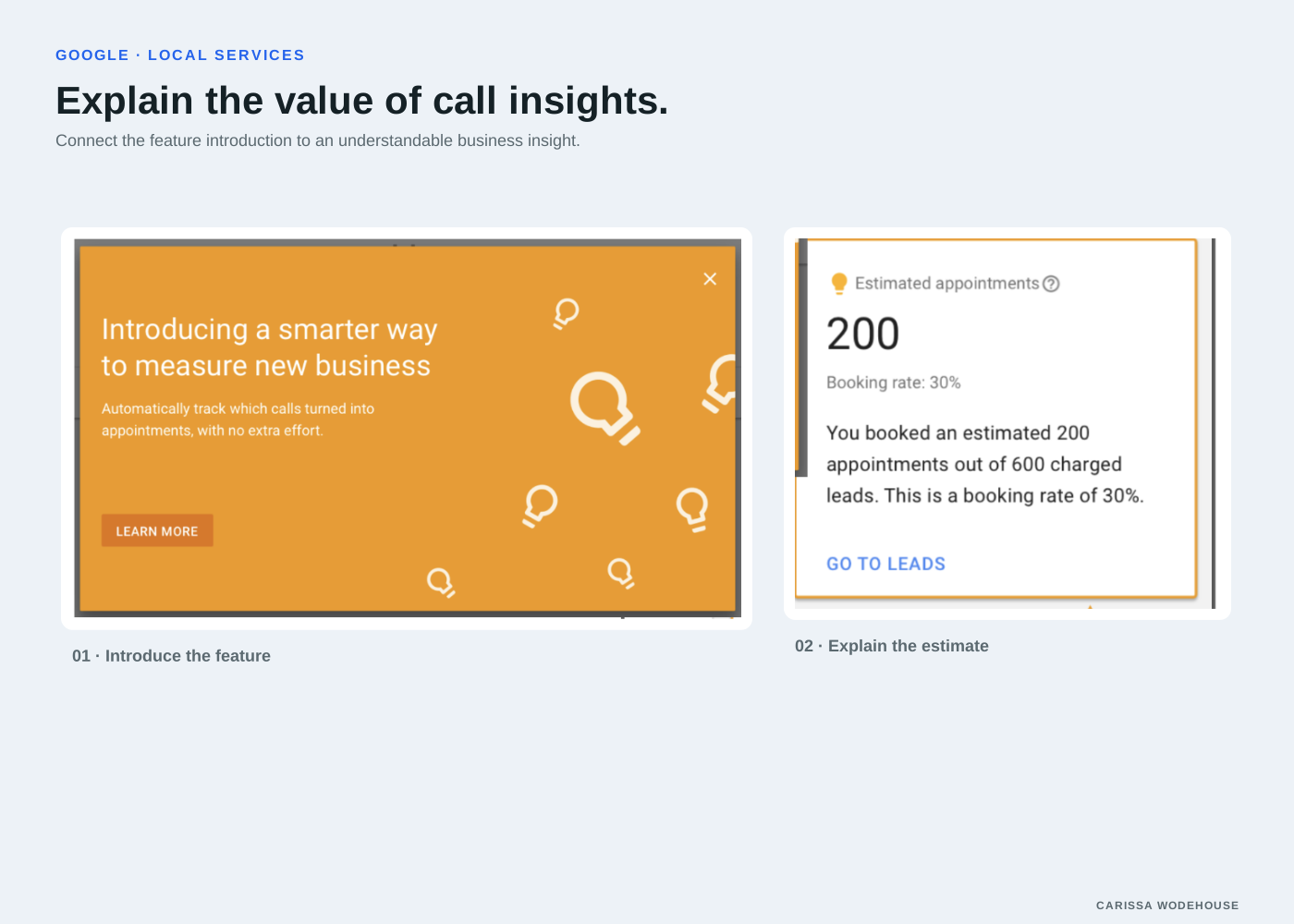 Explore the graphic
 - My role
- UX Writer & Content Strategist
- Period
- 2018–2019
- Project focus
- Machine learning · UX writing
At a glance
The work in context.
The challenge
Businesses needed to understand why a product was analyzing calls and how that could help them.
My contribution
Iterated on the explanation with research, legal and leadership, connecting technical language to business value.
The takeaway
Explain the basics of the system and what the information helps someone do.
The challenge
We route and record calls between the business and customer, which gives us a wealth of data. This feature was our first to apply machine learning to these calls and determine whether the customer made an appointment or not. For a small business owner, this removes the burden of tracking call outcomes. It also opens up a lot of opportunity to further analyze calls and see what leads to success.
The work
We had to be careful with the way we presented this, because it is a phone call between a business and their customer. For many users, this would be their first experience with a product openly describing how machine learning uses their information. I iterated on this language quite a bit, with extensive feedback from legal and senior executive level feedback on terms like “machine learning.”
We conducted research with several dozen participants, changing the copy as we went. I was consistently surprised by people’s reactions, which were about 20 seconds of disbelief (“A robot listens to my calls?!”) followed by acceptance (“Well that’s neat if it helps me!”). We were delighted to discover that businesses wanted to know the basics of how it worked and how it benefited them, and were not intimidated.
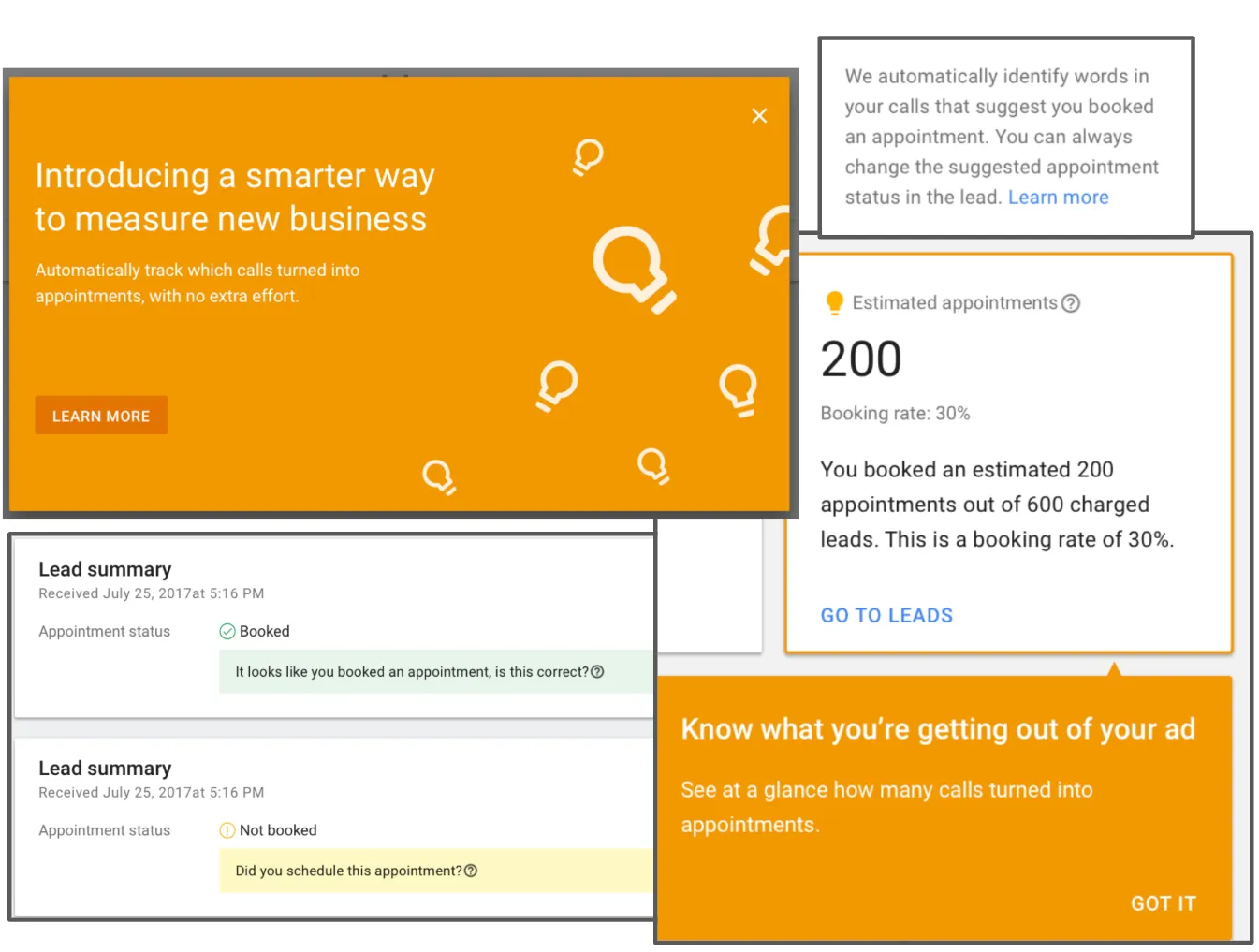
The introduction and insights describe what the system can help a business understand.
Outcome
This project led me to join a cross-functional AI group which produced Google’s first Human Centered Artificial Intelligence cookbook. I was one of two content strategists for the UX section.