CIMMYT · 2014–2016
The cultural change behind a shared intranet
The technical and cultural barriers when creating an internal hub to unite dozens of locations, hundreds of projects, and thousands of staff.
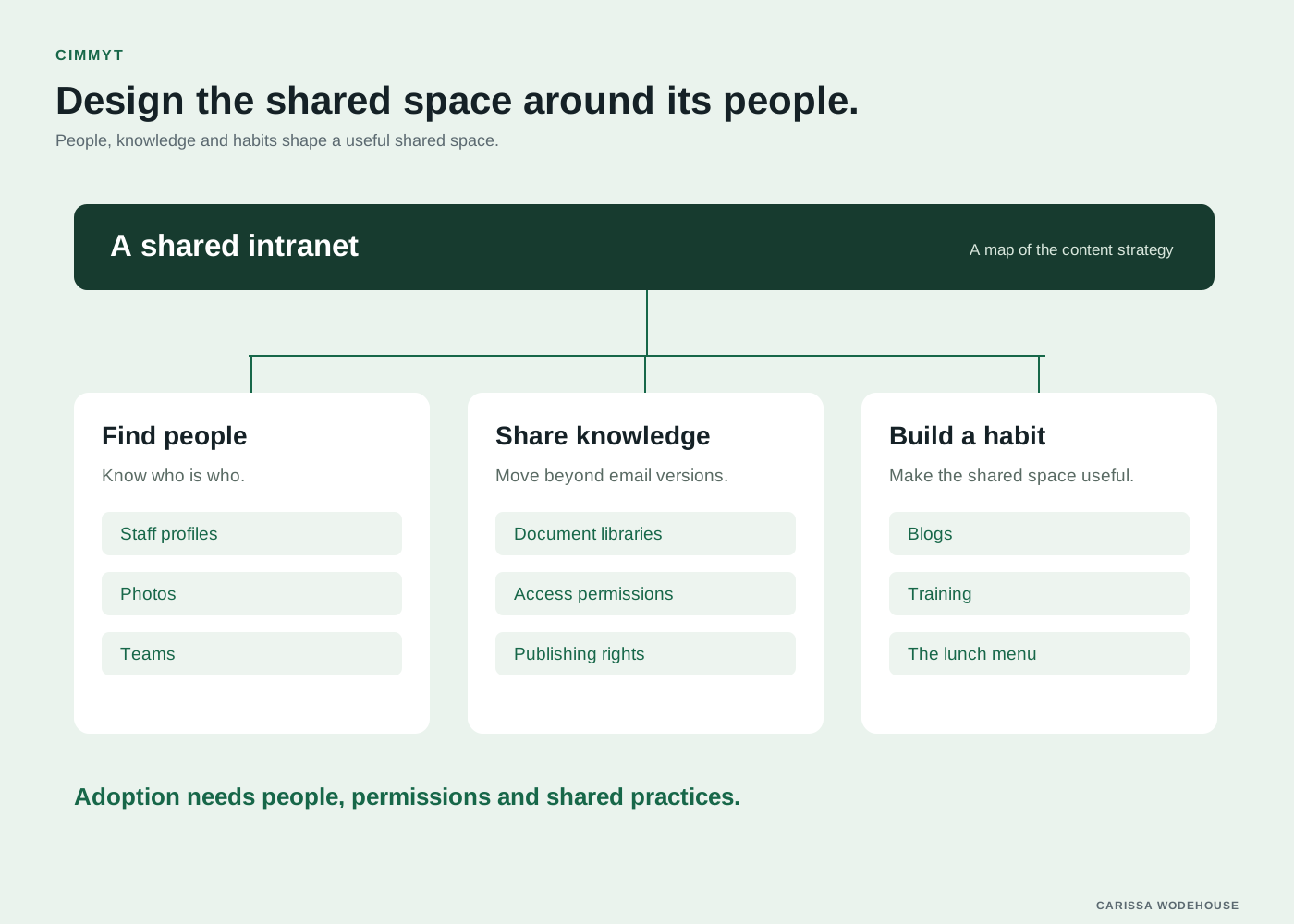 Explore the graphic
 - My role
- Knowledge Management Communications Officer
- Period
- 2014–2016
- Project focus
- Information architecture · Content strategy
At a glance
The work in context.
The challenge
A distributed organization needed shared information and publishing tools that people would want to use.
My contribution
Worked on the intranet’s content strategy with developers, librarians and the departments using it.
The takeaway
Adoption depended on cultural change and training, as well as the technology itself.
The technical and cultural barriers when creating an internal hub to unite dozens of locations, hundreds of projects, and thousands of staff.
The challenge
As the content strategist for the Knowledge Management team, I worked with the developers and the institutional librarians to put together an internal intranet for the non-profit with over 2,000 employees in 12 locations worldwide. They previously didn’t even have shared servers or file systems—everything was sent in versions via email. This intranet was not only a way for people to learn who was who, but also share documents, photos, and even post for the first time.
Some of the challenges included
-
Support offices worldwide with extremely slow internet
-
Create a system for teams as small as 1, or as large as hundreds
-
Allow permissions levels for both access and publishing, at the site and document level For example, a team site visible to everyone but editable by a select few, a document library visible to the core team but editable only by a manager
-
Let people personalize their sites as desired
-
Support a system that people would actually want to use
The work
The first thing was to go visit these departments and talk to them about their needs. This revealed pretty quickly that the people who would be interacting with the tool were the administrators. The managers and scientists would also use it, but much less, and few would want admin rights.
While the technical challenges were large, the cultural challenges were greater. The largest group of users was in Mexico, and the organization enforced a top-down hierarchy. Suddenly having documents, posts, and more exposed is a major mental shift for people. In some cases, it jeopardized the way they proved their work. If someone is used to sending versions with tracked changes to show their work to their manager (something like Proposal-version-2-edits-carissa.doc), changing to a shared doc, where edits aren’t tracked, and where someone else could make changes is alarming.
Outcome
The technical challenges and changes were clear, and we held training sessions in person and remotely to get people comfortable with the tools. We had to expand our training sessions to account for this cultural shift as well as the technical needs. We also had to consciously focus on the fun aspects, such as staff profiles, photos, and blogs.
Can you guess the most popular page on the intranet? It was the lunch menu.