Uber Eats · 2019–2020
A small invitation before checkout
Developed and tested checkout messaging with Data Science and Product Management, increasing cart size by several percent.
- My role
- Senior UX Writer · Content strategy and experimentation
- Period
- 2019–2020
- Project focus
- Content strategy · A/B testing
At a glance
Project summary
The problem
Encourage a small order addition without making the invitation intrusive or obstructing payment.
My contribution
Led messaging strategy and a team brainstorm; developed headline variations for A/B tests.
Key decision
Test motivations that work with unpredictable recommendations, with a friendly “No thanks” option.
Outcome
Cart size increased by several percent; planning-ahead and treat-yourself messaging performed well.
At Uber Eats, we identified checkout as an opportunity to suggest a small addition to someone’s order. The goal was to increase cart size while keeping the invitation light and making it easy to continue to payment.
I partnered with Data Science and Product Management to develop and test the language for a bottom sheet recommending additional items from the same restaurant.
I created and advocated for the “No thanks” CTA as part of Uber Eats’ friendly, approachable voice. It gave people a simple, conversational way to decline the suggestion and continue with their order.
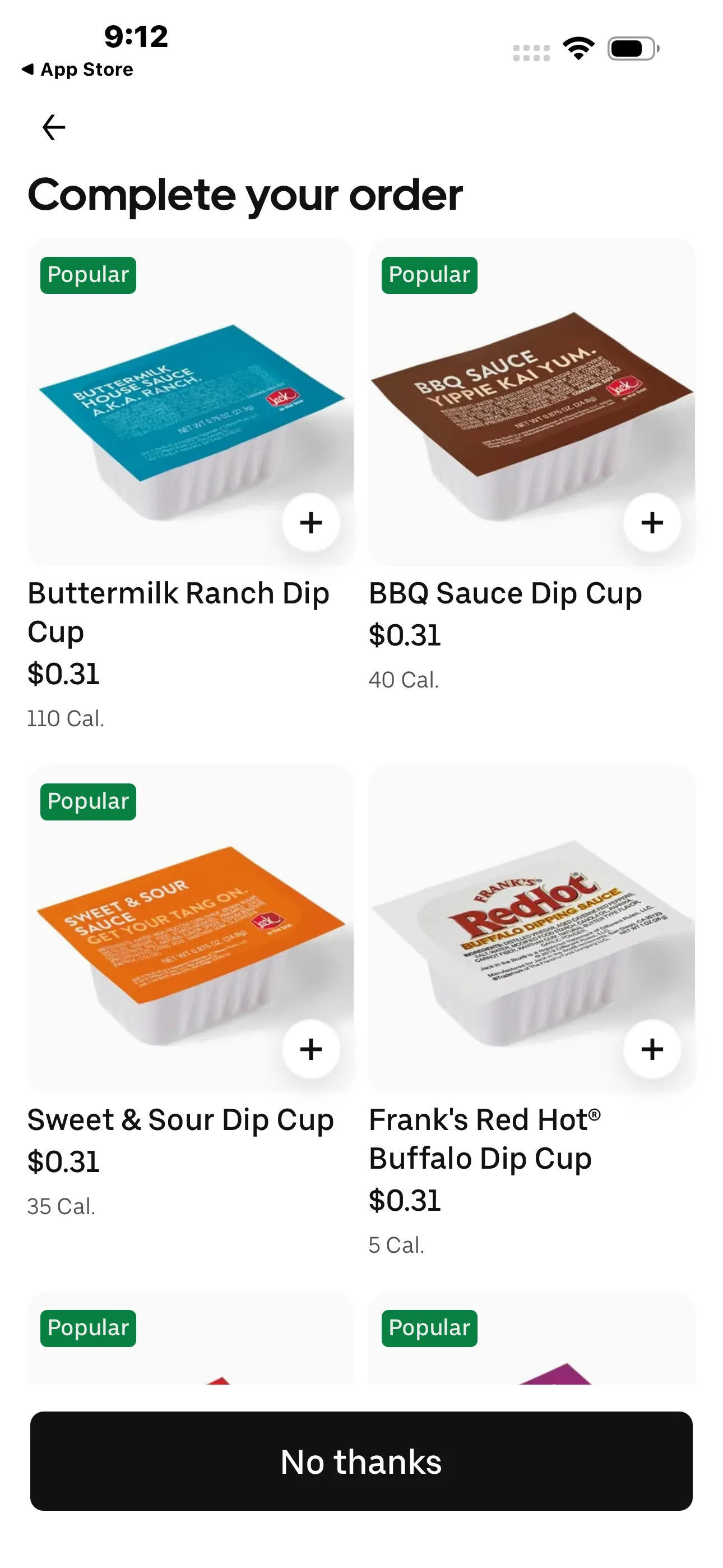
Design for unpredictable recommendations
We couldn’t guarantee which items would appear beneath the heading. A title such as “Get a dessert” could be misleading if the recommendations contained something else.
Instead, I explored different reasons someone might want to add an item. I facilitated a team brainstorm that brought everyone into the content strategy and became a fun opportunity to collaborate beyond our usual roles.
Turn motivations into testable language
We developed four approaches, with headline variations within each:
| Approach | Example titles |
|---|---|
| Fear of missing out | “Don’t miss out on these” · “Don’t leave these behind” |
| Planning ahead | “Order more for later” · “You might get hungry again” |
| Treat yourself | “You deserve it” · “Why not treat yourself” |
| Sharing | “Order extra to share” · “Invite someone to join you” |
Each approach offered a different reason to add something while remaining flexible enough to work with a changing set of recommendations.
Test the motivation behind the words
Over approximately one to two months, we ran A/B tests with variations within these themes, working with Data Science to evaluate their effect on cart size and look for statistically significant increases.
FOMO messaging did not perform well. Planning-ahead messaging performed particularly well, as did invitations to treat yourself. The findings challenged our assumptions about what would make an appealing last-minute suggestion.
Results
Testing increased cart size by several percent. The work demonstrated how a small content surface could contribute to a commercial goal through structured experimentation.
It was genuinely fun and a good team building exercise.